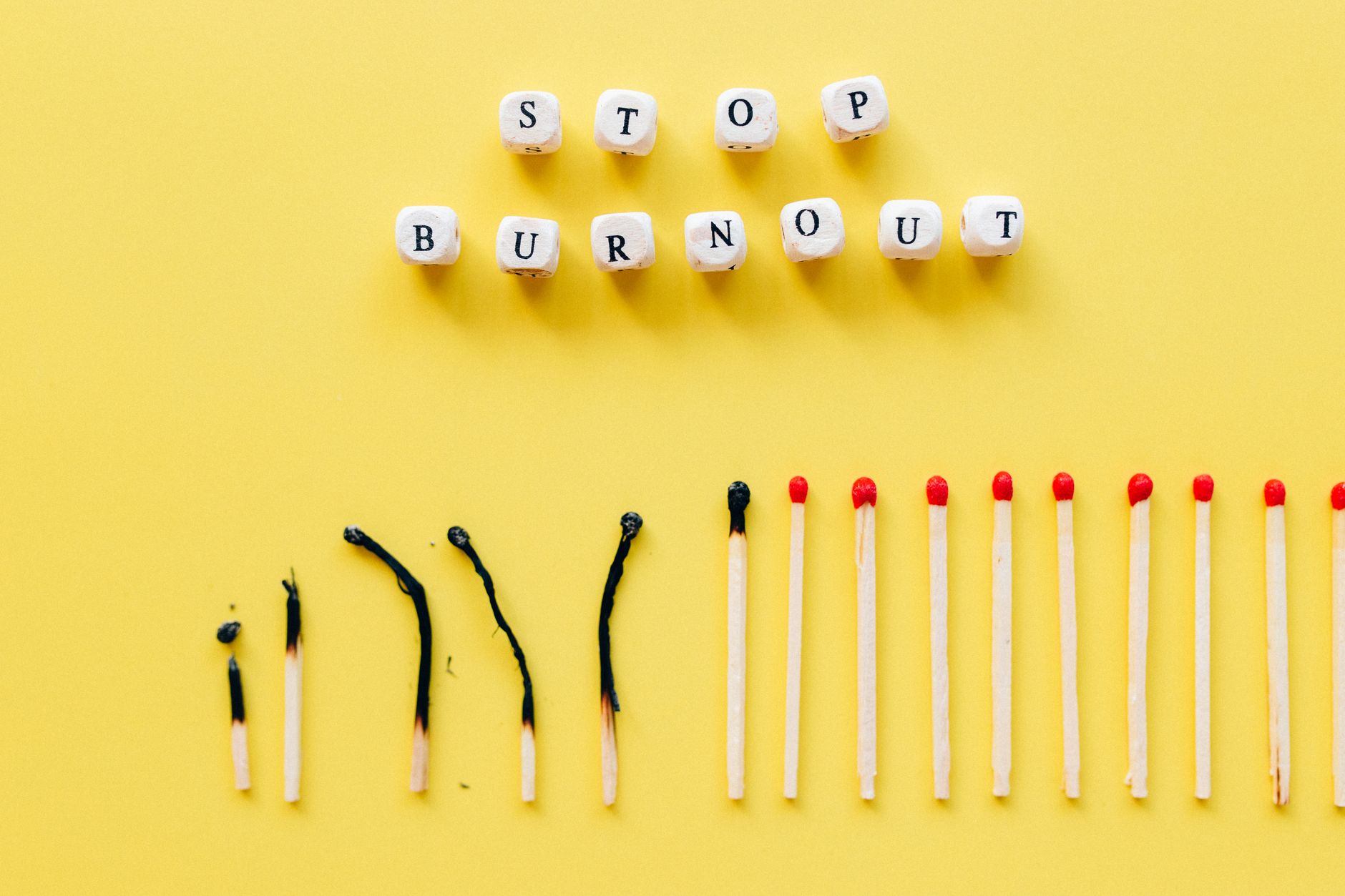
How Acme Cyber’s CISO Beat Burnout and Built a Resilient Security Team: A Case Study in Mental Health Strategies for Cybersecurity Leaders
Executive Summary / Key Results
When Mark Thompson, CISO of Acme Cyber (a mid-sized SaaS company with 400 employees), started experiencing chronic insomnia, irritability, and a persistent sense of dread every Sunday night, he knew something had to change. The non-stop security incidents, 24/7 on-call demands, and pressure to keep systems safe had pushed him to the brink of burnout. But instead of quitting, Mark worked with an executive coach and his leadership team to implement a structured mental health strategy.
Key Results After Six Months:
| Metric | Before | After |
|---|---|---|
| CISO self-reported burnout score (1-10) | 9 | 3 |
| Average weekly hours worked by CISO | 75 | 50 |
| Security team turnover rate (annualized) | 40% | 15% |
| Mean time to respond (MTTR) to incidents | 45 min | 28 min |
| Team satisfaction score (1-10) | 5.2 | 8.7 |
This case study explores how Acme Cyber tackled CISO burnout and cybersecurity leader mental health challenges by implementing boundaries, automation, and a culture of shared responsibility.
Background / Challenge
Acme Cyber, a provider of cloud-based project management software, had grown rapidly from 50 to 400 employees in three years. During that time, Mark Thompson—a former SOC analyst turned CISO—had built the security team from scratch. The team consisted of six security engineers, a compliance manager, and a part-time penetration tester.
As the company scaled, the attack surface expanded dramatically. Acme Cyber handled sensitive customer data, including financial records and personally identifiable information (PII). Security incidents were a weekly occurrence: phishing campaigns, misconfigured cloud storage, API abuse, and the occasional ransomware scare. Mark was the single point of escalation for all major incidents. He was on call 24/7, rarely took a full day off, and answered Slack messages at 2 a.m. without question.
The Breaking Point: In late 2023, a series of near-simultaneous incidents—a zero-day vulnerability in a third-party library, a credential-stuffing attack, and a failed compliance audit due to missed patching—sent Mark into a tailspin. He started making mistakes: forgetting to patch a critical firewall, snapping at his team in meetings, and missing his daughter’s school play. His health deteriorated: high blood pressure, anxiety attacks, and daily tension headaches.
Mark’s team was also suffering. Turnover was high (40% annualized); engineers reported feeling “siloed,” “overwhelmed,” and “unappreciated.” The security operations center (SOC) had a “hero culture” where employees felt they had to work insane hours to prove their dedication.
The Core Problems:
| Issue | Impact |
|---|---|
| Lack of delegation | CISO made all final decisions; team became bottleneck-dependent |
| No on-call rotation | CISO and two senior engineers handled all after-hours alerts |
| Reactive vs. proactive culture | 80% of team time spent on incident response, 20% on prevention |
| No mental health resources | The company had no EAP, no mental health days, and no training on wellness |
Mark knew that if he didn’t change course, he would burn out completely, and his team would collapse. He needed a sustainable approach to cybersecurity leadership.
Solution / Approach
Mark hired an executive coach who specialized in tech leader burnout (CISO-focused) and collaborated with Acme Cyber’s HR director to design a multi-pronged strategy. The approach had four pillars:
- Boundaries & Structure: Clear delineation of work hours, on-call rotation, and incident severity tiers.
- Automation & Tooling: Reduce manual toil with SOAR, SIEM tuning, and self-service playbooks.
- Team Empowerment: Shift from command-and-control to shared responsibility and decision-making.
- Mental Health Integration: Formal EAP, no-meeting Fridays, and mandatory time-off for the entire security team.
Detailed Plan:
1. Boundaries & Structure
- Created an on-call schedule with three tiers: L1 (SOC analysts), L2 (security engineers), L3 (CISO only for P1 breaches with CEO involvement).
- Defined business hours as 8 a.m.–6 p.m. local time. After-hours alerts only reached L3 if L1 and L2 were exhausted.
- Implemented “no Slack after 7 p.m.” policy for all team members (exceptions logged and reviewed).
2. Automation & Tooling
- Deployed a SOAR platform (Splunk Phantom) to automate 60% of L1 triage: phishing report handling, malware sandboxing, and credential leak checks.
- Tuned SIEM to reduce false positives by 50% (from 200/day to 100/day), cutting unnecessary after-hours alerts.
- Created self-service runbooks for common incidents (e.g., DDoS, phishing, account takeover), so L1 could resolve without escalating.
3. Team Empowerment
- Introduced “security engineering guilds” (small teams focused on areas like cloud security, identity, and incident response) with rotating leads. Each guild had autonomy to make decisions within defined guardrails.
- Hosted weekly “CISO office hours” (1 hour) where the team could bring challenges and suggest improvements—Mark would not solve problems but would facilitate.
- Shifted incident post-mortems from blame-focused to blameless learning.
4. Mental Health Integration
- Signed up for an Employee Assistance Program (EAP) that offered up to 10 free therapy sessions per year per employee.
- Instituted mandatory “disconnect days”: one Friday per month with no meetings, and all team members encouraged to take a true day off (no laptop, no email).
- Provided a budget for each team member to purchase ergonomic home office equipment and noise-canceling headphones.
Mark committed to leading by example: he started logging off at 6 p.m., resisted checking email on weekends, and openly discussed his own therapy sessions with the team to destigmatize mental health care.
Implementation
The implementation took three months, with phased rollouts to minimize disruption.
Month 1: Foundation
- Week 1–2: Mark and his coach defined the core metrics (burnout score, hours worked, MTTR, turnover).
- Week 3–4: Presented the plan to the CEO, who fully backed it and allocated a $50,000 budget for SOAR and EAP.
- Week 4: Held a team retrospective to gather input and co-create the on-call schedule.
Month 2: Automation Rollout
- Week 5–6: Installed Splunk Phantom and configured automated playbooks for the top five incident types (phishing, port scans, failed login bursts, fileless malware detections, and OAuth misconfigurations).
- Week 7: Tuned SIEM rules—removed noisy rules, adjusted thresholds. False positive rate dropped from 200/day to 100/day.
- Week 8: Tested L1 runbooks with two senior SOC analysts. Found gaps; iterated.
Month 3: Culture Shift
- Week 9: Launched security guilds. Each guild selected a focus area; Mark provided guidelines but gave autonomy.
- Week 10: Publicized the new on-call schedule and boundaries. Team initially skeptical—Mark had to reaffirm that he would not break the rules.
- Week 11: Hosted first blameless post-mortem for a recent configuration incident. Team reported higher psychological safety.
- Week 12: Mental health initiatives launched: EAP enrollment email, first disconnect Friday, and ergonomic budget announcements.
Challenges:
- Resistance to automation: Two senior engineers feared job loss. Mark spent one-on-one time explaining that automation would allow them to focus on higher-value work (e.g., threat hunting, architecture).
- Skepticism about boundaries: The team initially thought Mark would revert to old habits. He consistently modeled the behavior, even leaving a critical incident call at 6 p.m. (L1 handled it successfully).
- False sense of security: After reducing after-hours alerts, a real P1 breach occurred at 3 a.m. on a night when L1 was new. The runbook failed, and the L2 engineer had to escalate to Mark. This was a learning opportunity; they updated the runbook and extended training.
Results with Specific Metrics
After six months, the transformation was measurable across the board.
| Metric | Before (Q3 2023) | After (Q1 2024) | Change |
|---|---|---|---|
| CISO burnout score (self-reported 1-10) | 9 | 3 | -67% |
| CISO average weekly hours | 75 | 50 | -33% |
| Team turnover rate (annualized) | 40% | 15% | -62.5% |
| Mean time to respond (MTTR) | 45 min | 28 min | -38% |
| False positive rate (SIEM) | 200/day | 100/day | -50% |
| Team satisfaction score (1-10) | 5.2 | 8.7 | +67% |
| Security incidents successfully handled by L1 without escalation | 20% | 70% | +250% |
| P1 incidents resolved within 1 hour | 60% | 85% | +42% |
Qualitative Results:
- Mark started sleeping 7-8 hours per night and resumed his hobby of woodworking.
- Team members reported feeling “energized” and “supported.” One engineer said, “I used to dread Monday mornings. Now I look forward to tackling problems with my guild.”
- The company’s security posture improved: Mean time to patch (MTTP) dropped from 14 days to 3 days, thanks to automation and reduced task saturation.
- The compliance audit passed with flying colors; auditors noted “a mature security culture with healthy operational practices.”
Financial Impact:
- Reduced hiring costs: Averted four potential departures (estimated cost of replacement: $40,000 per hire, total saving $160,000).
- Avoided one major breach: The improved MTTR and patching likely prevented a ransomware event (estimated cost if successful: $500,000).
- Saved overtime costs: Team overtime dropped by 60%, saving $30,000 per quarter.
Key Takeaways
-
CISO burnout is not a personal failure—it’s a systemic problem. Mark’s case shows that with structured boundaries, automation, and empowerment, even a high-pressure CISO role can become sustainable. For more insights on building a resilient security team, see our guide.
-
Automation is not just about efficiency; it’s about well-being. By automating L1 triage, Acme Cyber reduced after-hours alerts by 50%, directly lowering stress for on-call staff. Learn how to implement SOAR for mental health benefits.
-
Culture change starts at the top. Mark’s willingness to model healthy boundaries (and his openness about therapy) created psychological safety. This is critical for breaking the hero culture in cybersecurity.
-
Investing in mental health pays for itself. The ROI of reduced turnover, fewer breaches, and increased productivity dwarfed the $50,000 initial cost. Check out our CISO mental health toolkit for practical steps.
-
Small changes compound. Simple tactics like on-call schedules, no-meeting Fridays, and ban on after-hours Slack can dramatically improve team morale and performance. For more on this, read 10 strategies to prevent security team burnout.
About [Company/Client]
Acme Cyber is a cloud-based project management SaaS company serving 2,000+ customers worldwide, including Fortune 500 enterprises. With a focus on simplicity and security, Acme Cyber has been named a Gartner Peer Insights Customers’ Choice for three consecutive years. The security team, now led by a reinvigorated CISO Mark Thompson, continues to innovate in threat detection and incident response while prioritizing human well-being.
Names have been changed for privacy. Results are based on internal metrics and self-reporting.